
You’re Not Lazy. You’re Not Broken. You Might Be Depressed.
Depression treatment in Austin that goes deeper than a weekly session. Evidence-based IOP — CBT, behavioral activation, EMDR when trauma’s underneath. You don’t need an addiction to come here. In-network with major plans. (512) 616-0809.
Feeling like yourself again is possible
Depression doesn’t always look like lying in bed all day. Sometimes it looks like getting everything done and feeling nothing while you do it. Answering emails, making dinner, showing up — running on fumes and calling it fine. Other times it’s heavier than that: the mornings are a wall, the phone weighs a hundred pounds, and the things you used to love feel like chores you’re faking your way through.
If that’s where you are, you’re not weak and you’re not making it up. Depression is a real medical condition — it changes how your brain handles mood, energy, sleep, and motivation. Willpower doesn’t fix a chemical and emotional problem any more than it fixes a broken arm.
One thing we want to say up front, because people ask: you don’t need to have a drug or alcohol problem to come here. Awkward Recovery treats depression on its own. If substance use is part of your story, we handle both. If it’s not, you still belong here.
In crisis right now?
If you’re thinking about hurting yourself or ending your life, please reach out this minute: call or text 988 (Suicide & Crisis Lifeline), or text HOME to 741741 (Crisis Text Line). Both are free, confidential, and available 24/7. To reach Awkward Recovery directly, call (512) 616-0809. You don’t have to white-knuckle this alone.
What Depression Is (and What It Isn’t).
Everybody feels down sometimes. Sadness after a loss, a rough week, a hard season — that’s being human, and it passes. Clinical depression is different. It sticks around (two weeks or more, by the clinical definition), it shows up most of the day on most days, and it starts to interfere with your life — work, relationships, sleep, the ability to enjoy anything.
It also comes in more than one form. Major depression is the one most people picture. But there’s also persistent depression (a lower-grade heaviness that hangs on for years and starts to feel like “just my personality”), depression that rides along with anxiety or trauma, postpartum depression, and seasonal patterns. They’re treated differently, which is exactly why a real assessment matters more than a self-diagnosis from a quiz.
Knowledge Nugget: Depression isn’t sadness turned up loud. For a lot of people it’s the opposite — numbness, flatness, the color drained out. Feeling nothing is a symptom too.


What Depression Looks Like Day to Day.
Depression is easy to miss — especially your own — because it creeps in and rewrites what “normal” feels like. Here’s what it tends to look like when it’s running the show.
The High-Functioning Trap.
A lot of people with depression never miss a day of work. They’re the reliable one, the one who holds it together, the one nobody worries about. That’s exactly what makes it dangerous — because “still functioning” gets treated like “still fine,” and the person inside is running on empty for months or years.
If you’re reading this thinking “it’s not that bad, other people have it worse” — that thought is common, and it’s often depression talking. You don’t have to fall apart to deserve help. Feeling trapped in a flat, heavy version of your own life is reason enough.

When Weekly Therapy Isn’t Enough.
Weekly therapy is great, and for a lot of people it’s all they need. But sometimes the once-a-week hour isn’t keeping up — you have the session, feel a little better, and by Tuesday you’re back underwater. When depression is heavier or has been dragging on, more support, more often, is what moves the needle.
That’s what an Intensive Outpatient Program (IOP) is built for. Instead of one hour a week, it’s several sessions a week — group and individual — while you keep living at home, keep your job, keep your life. It’s a real step up in support without disappearing into a 30-day residential stay. Signs it might be time:
- Weekly therapy isn’t holding — you keep sliding back between sessions.
- Depression is affecting your work, your relationships, or your ability to function day to day.
- You’ve tried medication, therapy, or both, and you’re still stuck.
- You’re using alcohol or drugs to cope, and it’s making things worse.
- You’re having thoughts of suicide without a plan or intent to act — something many of our mental health IOP clients carry when they first walk in.
If you’re having thoughts of suicide with a plan or intent, or you can’t keep yourself safe, that’s a sign you need a higher level of care first — residential or hospitalization — and we’ll help you get there. IOP is a step down from that, not a substitute for it.

The Family Side: Loving Someone Who’s Depressed.
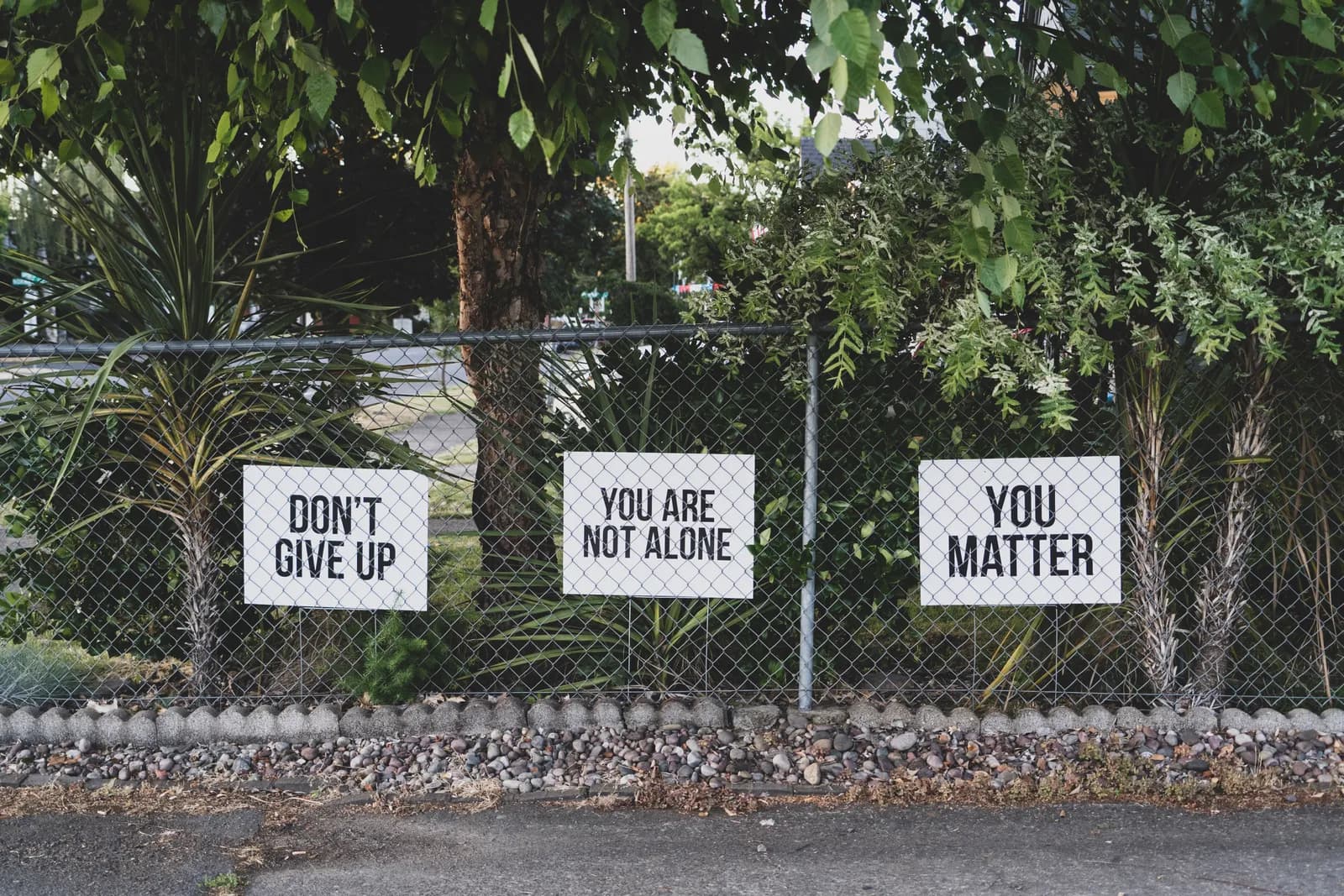
If it’s someone you love, depression can be confusing and lonely to watch. You can’t cheer them out of it, and “have you tried going for a walk” tends to land like a slap, even when you mean well. What helps:
- Stay close without fixing. “I’m here and I’m not going anywhere” beats advice almost every time.
- Name what you see, gently. “You haven’t seemed like yourself — I’m worried, and I love you.”
- Help with the small logistics. Depression makes phone calls and forms feel enormous. Offering to help make the first call is a real gift.
- Take suicidal talk seriously, every time. If they mention wanting to die, ask directly, stay with them, and call 988. You won’t plant the idea by asking — you’ll open a door.

So… How Do You Get Help?
The real question is — how much longer do you want to live in the gray version of your life?
Here’s what help doesn’t look like:
- Being told to “think positive” or “count your blessings.”
- A prescription and a “good luck” with nobody following up.
- Only digging into your past — or only patching this week’s symptoms — instead of connecting the two.
Here’s what real help can look like:
- A team that treats depression as the medical condition it is — and treats you like a person, not a diagnosis.
- Evidence-based therapy that balances both — skills you can use this week, and honest insight into what’s underneath.
- A schedule that works around your job and your life instead of torching them.
What We Do at Awkward Recovery.
We treat depression head-on, without the eye-roll and without the cold clinical distance. You’re not dramatic for struggling, and you’re not a lost cause. Here’s how we fight it with you.
Beyond Talk Therapy.
At Awkward Recovery, healing isn't only about talking. Alongside the therapy, the program brings in the whole person - yoga, breathwork, sound healing, and fitness - plus regular Family Nights that bring the people who matter into the work. Real evidence-based treatment, from a team that treats you like a person, not a chart.

Start the Hard Part. We’ll Handle the Rest.
Awkward Recovery is based in Austin, Texas. We’re honest about how heavy depression gets, and we’re serious about helping you climb out of it. If you’re ready to try something that fits your life, we’re here. Call (512) 616-0809 or reach out through the form. Confidential. No sales pitch. We’re in-network with major insurance plans and verify your benefits for free.
You don’t have to keep pushing through on empty.

Depression Treatment FAQ.
Sadness is a normal reaction to something hard, and it lifts. Clinical depression sticks around — two weeks or more — shows up most of the day on most days, and interferes with your life: sleep, work, focus, and the ability to enjoy things. A real assessment sorts out where you fall.
No. We treat depression on its own. Plenty of our clients come here for depression alone, or depression plus anxiety or trauma. If substance use is part of the picture, we treat both together — but it’s not a requirement to walk through the door.
For a lot of people, the two together work better than either alone. Therapy gives you skills and gets at the root; medication can ease symptoms enough to make that work possible. What’s right for you depends on your history and how severe things are — that’s a conversation, not a one-size answer.
It varies. Antidepressants often take four to eight weeks to reach full effect. Therapy timelines depend on severity and whether trauma or substance use is in the mix. In IOP, many people feel real movement within the first several weeks, with continued outpatient support after.
We’re careful with the word “cured.” Depression is highly treatable, and most people who get the right treatment feel significantly better and get their lives back. For some it’s a one-time episode; for others it’s something they learn to manage well over time. Either way, feeling like yourself again is a realistic goal.
If weekly therapy isn’t holding — you keep sliding back between sessions — or depression is seriously affecting your work, relationships, or daily functioning, IOP’s added structure often helps. It’s several sessions a week instead of one, while you stay in your life. We’ll help you figure out the right level of care in a quick, no-pressure conversation.
No — we’re a therapy-focused program. When medication is part of the plan, we coordinate with a prescribing psychiatrist (yours or one in our referral network) so your meds and therapy work together.
Often, yes. The most common reason therapy doesn’t help depression is that it stayed at “talking about it” and never got to actual skills or the root cause. Evidence-based therapy delivered in IOP is a different intensity and a different toolkit than a weekly check-in.
Most major plans cover IOP-level care for depression as a behavioral-health benefit, and we’re in-network with major carriers. Coverage still varies by plan, so we verify your exact benefits for free — no cost, no commitment. Start a free benefits check.
Ready When You Are.
Depression treatment doesn’t have to mean two years of 50-minute sessions with nothing changing. IOP is faster, more supportive, and built around the skills you need. Call (512) 616-0809 or send a message. Confidential. No sales pitch.

In-Network with Most Major Providers.
Out-of-Network Policies Accepted From All Major Providers
Verify Insurance







If You or Someone You Love Needs Help Right Now.
Crisis support is available immediately. Don't wait if you're in danger or experiencing thoughts of self-harm.
- Austin-Travis County Integral Care Crisis Services
- Dell Children's Medical Center Crisis Services
- University of Texas Counseling and Mental Health Center (for UT students)
For everything else, talk to admissions or call (512) 616-0809.
Are You Ready?
Talk with our admissions team. Confidential, no obligation.