
7-OH: The Gas-Station Opioid in a Wellness Costume.
7-OH (7-hydroxymitragynine) recovery support in Austin — IOP for opioid use disorder, detox referrals, dual-diagnosis care. (512) 616-0809.
Recovery Is Possible
You probably didn't think you were doing an opioid. That's the whole trick. 7-OH gets sold off a bright little display by the register — gummies, shots, tablets, "plant-based," "all natural," right next to the energy drinks. It looks harmless. It isn't.
This is for you if 7-OH has quietly taken over your day. Maybe you grabbed it to take the edge off, or to get off something harder, or just because it was legal and easy. And now you can't stop. The supply runs your schedule. The withdrawal scares you. You're not weak. You got hooked on an opioid that was dressed up to look like a supplement.
If you're just here to read up on something you saw at the smoke shop — stay. Maybe you're worried about your kid, your partner, your coworker who keeps disappearing to the car. Either way, we're not going to hand you a sanitized PSA. This is the real version. Buckle up.
What Even Is 7-OH?
7-OH is short for 7-hydroxymitragynine. It starts as a tiny, naturally-occurring alkaloid in the kratom leaf — we're talking trace amounts. The stuff being sold today isn't trace amounts. It's concentrated and semi-synthetic: labs pull it out, crank it up, and press it into tablets and shots that are a different animal than the leaf they came from.
Here's the part the packaging won't tell you: 7-OH hits the same mu-opioid receptors as heroin and fentanyl. In lab studies it's a stronger opioid-receptor agonist than morphine. So when a shop sells it as "just kratom," that's like calling moonshine "just grape juice." It's an opioid. A potent one. Sold legally, unregulated, with no dose you can trust on the label.
In 2025 the FDA called concentrated 7-OH products a serious public health risk and started moving to crack down on them — warning letters, talk of scheduling, the works. Translation: the people whose job is to flag dangerous drugs looked at this one and hit the alarm. Meanwhile it's still on the shelf.
Knowledge Nugget: "Natural" and "legal" are not the same as "safe." 7-OH is a concentrated opioid wearing a kratom label.

Signs of 7-OH Addiction.
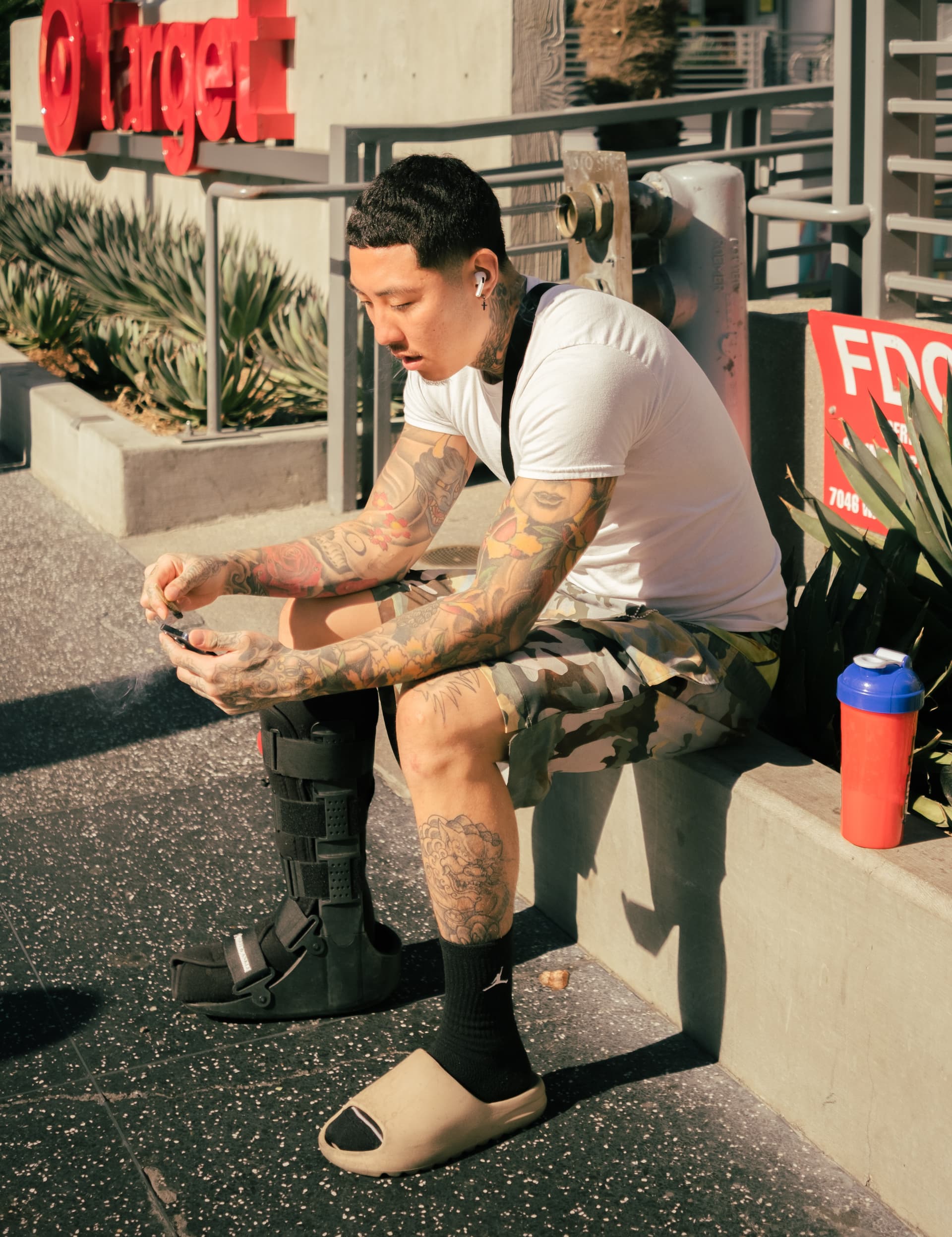
7-OH dependence sneaks up because it's legal and cheap. Nobody thinks the gas-station tablet is the problem — until they try to stop and the floor drops out. Here's what it actually looks like.
Why 7-OH Is More Dangerous Than the Label Lets On.
The danger isn't that 7-OH is some exotic monster. The danger is that it's an opioid pretending not to be one — sold without a doctor, without a real dose on the label, without anyone telling you how quickly it can make you physically dependent.
Because it's concentrated and unregulated, the dose swings — not just between brands, but between tablets in the same package. There's no pharmacist, no standard, no guardrail. You're guessing every time.
Here's what 7-OH dependence can lead to:
- Full opioid dependence. Your body adapts to a steady opioid and starts needing it just to feel even.
- Brutal withdrawal. Not "a bad day." Days of vomiting, bone aches, sweats, insomnia, and cravings that hijack your thinking.
- A false sense of safety. It gets sold as a "safer" choice than opioids — but it is one, and a strong one. People reach for it to dodge harder drugs, not realizing they're taking an unregulated opioid with no dose they can trust.
- A double life. Hiding a legal-but-out-of-control habit eats your honesty, your relationships, and your peace.
Here's the cruel irony: a lot of people picked up 7-OH to get *off* opioids. It got marketed like a safer way off opioids. But 7-OH is an opioid itself — stronger than morphine — so for a lot of people it isn't an exit at all. It's trading one opioid for another, except this one comes with no dose you can trust.


The Family Fallout: When "It's Just a Supplement" Stops Being True.
If someone you love is hooked on 7-OH, you might not even have the language for it yet. It's legal. It came from a store. They keep telling you it's basically herbal. But you're watching them get sick when they run out, plan their day around a gas station, and snap at you when you bring it up. You're not imagining it.
You can't dose them off it and you can't argue them into quitting. But you can:
- Call it what it is. Not a supplement. Not a vitamin. It's a concentrated opioid. Naming it honestly is the first crack of light.
- Set hard lines. You don't control their use, but you do control your money, your car, your home, and your peace.
- Skip the shame. "How did you let this happen" closes the door. "I'm scared and I'm not going anywhere" keeps it open.
- Get your own support. Loving someone through opioid dependence is heavy. You need people in your corner too.

So… How Do You Get Help?
The real question is — how much more of your day do you want this tablet to own?
Here's what help doesn't look like:
- Being told to "just stop, it's legal, it's not a big deal"
- White-knuckling cold turkey through opioid withdrawal alone in your bathroom
- A program that's never heard of 7-OH and waves it off as harmless
Here's what real help can look like:
- A team that actually knows what 7-OH is and takes the dependence seriously.
- A safe way through withdrawal instead of toughing it out and relapsing.
- A program that fits around your job and your life instead of blowing them up.

What We Do at Awkward Recovery.
We treat 7-OH like the opioid it is — not the supplement it pretends to be. You're not dramatic for struggling with it, and you're not weak. You got dependent on a strong drug that was engineered to feel harmless. We help you get free of it and figure out what was underneath the reaching in the first place.
Frequently Asked Questions.
Yes. 7-OH (7-hydroxymitragynine) acts on the same mu-opioid receptors as heroin and fentanyl, and in lab studies it is a stronger opioid-receptor agonist than morphine. It gets sold as a wellness product off a shelf by the register, which is exactly why people do not realize what they are taking until they try to stop.
The physical part usually runs about four to seven days, starting within roughly 6 to 12 hours of the last dose and peaking in the first two or three. Expect the standard opioid picture — sweats, chills, runny nose, muscle and bone aches, stomach trouble, restless legs, and no real sleep. Anxiety, low mood, and cravings can last for weeks after that.
Opioid withdrawal is rarely fatal on its own, but 7-OH deserves more caution than the packaging suggests. Doses are unregulated and vary between brands and even between tablets, so people are often far more dependent than they realize. Get a medical evaluation before you stop, especially if you have been dosing all day, using anything else alongside it, or you have other health conditions.
It depends on how much you have been taking and for how long. Some people need a medical detox; others can do it with outpatient medical clearance and support. Because 7-OH is an opioid, this is not a call to make by yourself in your bathroom. Call (512) 616-0809 and we will help you figure out which one you need.
Because regulation has not caught up. It gets marketed as a plant-based supplement rather than a drug, which keeps it off the shelves where controlled substances live. In 2025 the FDA called concentrated 7-OH products a serious public health risk and began moving to restrict them. Legal and natural are not the same as safe.
You are not the only one — it gets marketed as a safer way off opioids, and for a lot of people it is not an exit, it is a swap. That is not a failure on your part. It does mean you are still dealing with opioid dependence, and it needs to be treated as one. The good news is you already know you want out. Call us and we will build a plan that gets you all the way there.
Usually. We are in-network with most major plans and we will verify your benefits before you commit to anything. We do not accept Medicaid. Call (512) 616-0809 or use the insurance verification form and we will check for you.
In-Network with Most Major Providers.
Out-of-Network Policies Accepted From All Major Providers
Verify Insurance



If You or Someone You Love Needs Help Right Now.
Crisis support is available immediately. Don't wait if you're in danger or experiencing thoughts of self-harm.
- Austin-Travis County Integral Care Crisis Services
- Dell Children's Medical Center Crisis Services
- University of Texas Counseling and Mental Health Center (for UT students)
For everything else, talk to admissions or call (512) 616-0809.
Are You Ready?
Talk with our admissions team. Confidential, no obligation.