Boredom in Recovery: Why Stillness Is a Superpower.
Boredom is one of the most underrated relapse triggers — and one of the most important skills to build in early recovery. How stillness helps.
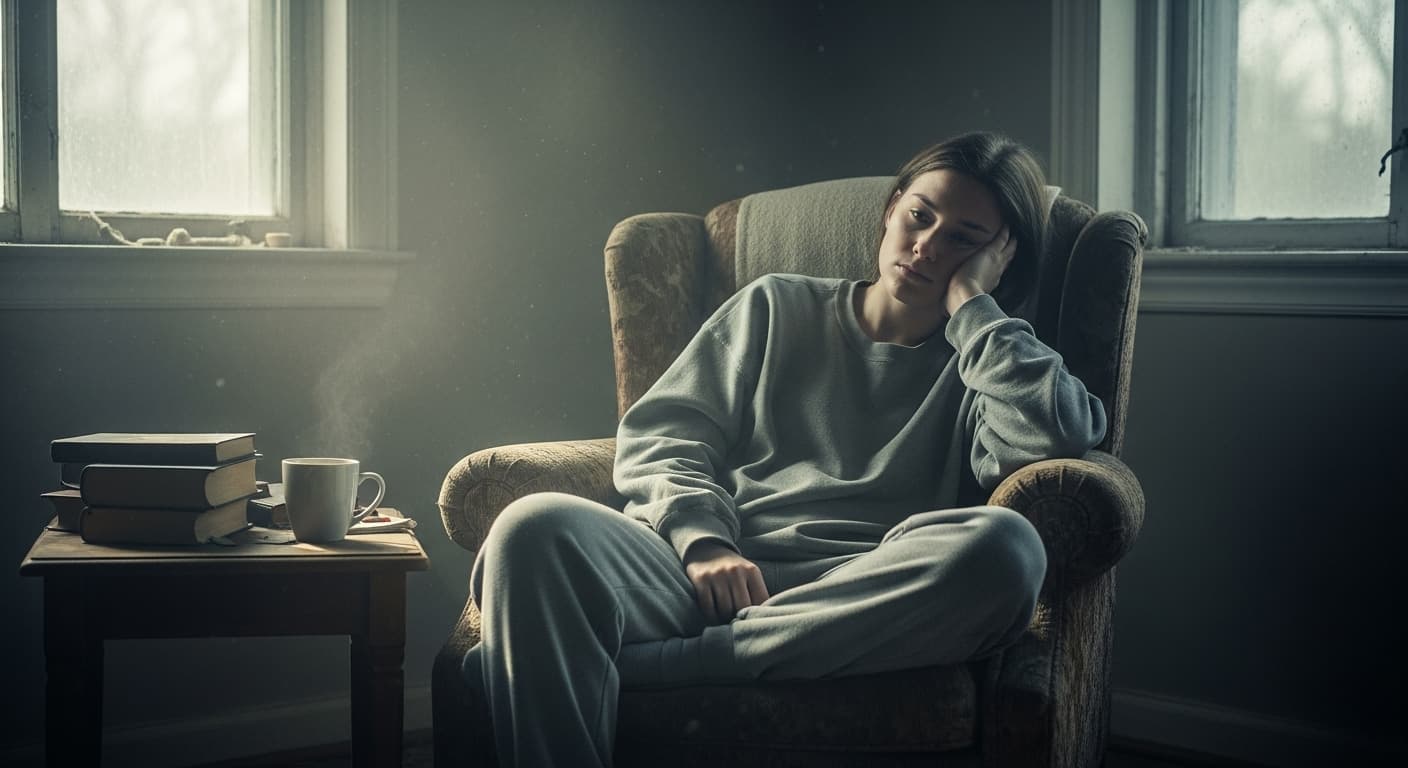
When's the last time you were genuinely bored? Not scrolling-while-waiting bored, but actually sitting there with nothing to do and nowhere to be? If you can't remember, you're not alone—and that might be part of what's keeping you stuck in your recovery journey.
We've built our lives around avoiding discomfort at all costs. The second things get quiet, we reach for our phones. The moment we feel restless, we find something to consume. And in addiction recovery, this constant need for stimulation can become its own kind of problem—one that undermines the very coping skills you're trying to build.
Here's the thing most people don't talk about: the ability to sit with boredom, embrace stillness, and find comfort in solitude isn't just nice to have—it's a damn superpower. And it might be one of the most underrated recovery skills you can develop.
Overstimulation Is Running the Show.
We're living in an era where being busy equals being important, where constant content consumption feels productive, and where the idea of doing absolutely nothing triggers genuine panic. But what if we've got it completely backwards?
Overstimulation is like trying to see clearly while standing in a strobe light—everything becomes fragmented, overwhelming, and impossible to process. Your emotional regulation goes to hell because you never give your nervous system a chance to reset. Your creativity tanks because you're always consuming instead of creating. And your relationships suffer because you can't be fully present when your brain is constantly seeking the next hit of stimulation.
For anyone working through addiction recovery or mental health challenges, this matters even more. Substances and compulsive behaviors often serve as escape hatches from discomfort. When you remove those escape hatches but replace them with constant digital stimulation, you're not actually learning to tolerate distress—you're just finding a more socially acceptable way to avoid it.
Research from the [](https://www.apa.org/topics/mindfulness)American Psychological Association shows that mindfulness practices—which require the ability to sit with present-moment experience—significantly improve outcomes in addiction treatment. But mindfulness is nearly impossible when your brain has been trained to expect constant input.
This isn't just about personal wellness—it's about how we show up in every area of our lives. When you're always reaching for distraction, you're training your brain to be uncomfortable with yourself. And that's a problem when recovery requires you to actually sit with your thoughts, feel your feelings, and do the work.
Boredom Builds What Willpower Can't.
Here's what hit different when we really dug into this: boredom builds genuine confidence. Not the performative kind you project on social media, but the real kind that comes from knowing you're okay even when nothing exciting is happening.
Most people panic when they're not entertained or productive—they immediately reach for distraction. But when you can sit with that discomfort, you develop resilience and self-reliance that doesn't depend on external validation or stimulation. You become comfortable with your own company, which is the foundation of authentic confidence and lasting emotional regulation.
In recovery, this matters more than you might think. Because early recovery is full of moments where you're going to feel restless, uncomfortable, and like you need something to take the edge off. If you've never practiced sitting with discomfort, those moments become exponentially harder to navigate.
The coping skills taught in programs like our [](https://www.awkwardrecovery.com/our-programs/intensive-outpatient-program)Intensive Outpatient Program (IOP) often include distress tolerance techniques—but those techniques only work if you've built the underlying capacity to sit with discomfort in the first place. Stillness practice is like strength training for your nervous system. It prepares you for the heavy lifting that recovery demands.
The Extended Adolescence Problem.
Today's tech-heavy world has created something weird: extended adolescence that doesn't just affect teenagers. Adults are stuck in comparison mode, seeking external validation, and avoiding the uncomfortable but necessary work of sitting with themselves.
We're so busy curating our external image—whether it's professional success, parenting perfection, or social media presence—that we lose touch with who we actually are underneath all that performance. This identity confusion keeps people anxious and directionless, always chasing the next thing that might make them feel whole.
For people in recovery in Austin's high-pressure environments—tech professionals, creatives, service industry workers—this pressure intensifies. The culture rewards constant productivity and connectivity. Stepping back feels like falling behind. But that stepping back might be exactly what sustainable recovery requires.
The antidote? Learning to be unstimulated. Letting your brain actually process instead of constantly consuming. Finding out who you are when you're not performing for anyone.
Practical Stillness (Not Zen Master Bullshit).
This isn't about meditating for three hours a day or becoming some enlightened being who never touches their phone. It's about practical stuff—like what happens when you stop filling every quiet moment with podcasts, scrolling, or busywork. When you actually let your brain be unstimulated for once.
Start small:
- Five minutes of doing nothing
- A walk without headphones
- Sitting with your coffee without checking your phone
- Waiting in line without pulling out your device
- Eating a meal without screens
It's going to feel uncomfortable at first—that's the point. You're building a tolerance for stillness that will serve you in ways you can't predict yet. This is distress tolerance in its most basic form, and it translates directly to the bigger moments when you need those skills most.
SAMHSA's coping strategies emphasize the importance of taking breaks and practicing self-care—stillness is one of the most fundamental forms of both.
The weights don't get lighter, you just get better at picking them up. And sometimes, the heaviest weight to lift is the one that says you always need to be lifting something. Sometimes the most radical thing you can do is absolutely nothing.
How This Shows Up in Recovery Work.
At Awkward Recovery's IOP in Austin, we see this pattern constantly. People come in with solid intentions, they're doing the work in group, they're showing up—but they're also filling every spare moment with stimulation. They're never actually alone with their thoughts.
Our [](https://www.awkwardrecovery.com/clinical-program)clinical program incorporates DBT skills like distress tolerance and emotion regulation—skills that become exponentially more effective when paired with the ability to sit with discomfort. When we help clients build stillness into their recovery toolkit, something shifts. They start noticing their triggers earlier. They develop better emotional regulation because they've practiced letting feelings move through them without immediately reacting. They build the kind of inner stability that doesn't depend on everything going right.
For those dealing with [](https://www.awkwardrecovery.com/articles/dual-diagnosis-treatment-austin)dual diagnosis—both mental health and substance use challenges—this capacity becomes even more critical. Anxiety and depression both thrive on avoidance behaviors, and constant stimulation is a form of avoidance.
This isn't a replacement for evidence-based treatment, therapy, or medication when needed. It's a complement to those things—a foundational skill that makes everything else work better.
Frequently Asked Questions.
How does boredom help with addiction recovery?
Boredom tolerance is essentially distress tolerance training. When you learn to sit with the discomfort of having nothing to do, you're building the same neural pathways that help you sit with cravings, difficult emotions, and triggering situations. It's practice for the harder moments without the high stakes.
Why is overstimulation bad for mental health?
Constant stimulation keeps your nervous system in a state of low-grade activation. You never fully rest, process, or reset. This leads to increased anxiety, decreased emotional regulation, difficulty being present in relationships, and reduced ability to tolerate discomfort—all of which complicate recovery from addiction or mental health challenges.
What's the connection between stillness and emotional regulation?
Emotional regulation requires the ability to notice what you're feeling before reacting. When you're constantly stimulated, you don't have space for that noticing. Stillness creates gaps where awareness can develop. Over time, this translates to better impulse control and more intentional responses to triggers.
How do I start practicing stillness if I've never done it?
Start ridiculously small. Five minutes without your phone. One meal without screens. A short walk without headphones. The goal isn't perfection—it's building tolerance gradually. Expect it to feel uncomfortable, even anxiety-provoking at first. That discomfort is actually the point.
Is this the same as meditation?
Not exactly. Meditation is one form of stillness practice, but you don't need to meditate to build this skill. Simply being without stimulation—not actively doing anything, not consuming anything—counts. Some people find unstructured stillness actually more challenging than guided meditation.
How does this fit with IOP treatment?
Stillness practice complements IOP treatment by building foundational distress tolerance. The coping skills and therapeutic work done in IOP programs are more effective when clients have developed basic comfort with discomfort. Think of it as conditioning that makes the main workout more productive.
Go Deeper.
We explored this topic in detail on the Atomic Souls Podcast with Khalid Mokhtarzada, a Toronto CEO who breaks down how overstimulation affects everything from leadership to parenting to marriage—and why boredom might be the most underrated skill of our time.
Looking for Support in Austin?.
If you're navigating recovery and looking for a community that gets it—without the sterile clinical environment—Awkward Recovery offers an intensive outpatient program (IOP) in South Austin. We focus on building real skills for real life, including the uncomfortable stuff like learning to sit with yourself.
This content shares perspectives on mental health and recovery. It's not a substitute for professional help. If you're struggling, reach out to a mental health professional.
Crisis support: 988 Suicide & Crisis Lifeline
Rachel Stein.
For more than a decade, Rachel has walked alongside clients as a clinician — challenging when it matters and helping them build a life worth staying sober for. Trained in EMDR, DBT, and TF-CBT, she has built multiple intensive outpatient programs and curriculums from the ground up, and she leads the supervision structure that keeps the team accountable.
- EMDR, DBT & TF-CBT
- Addiction + co-occurring mental health
- IOP program design
- Trauma-informed practice
- LGBTQIA+ affirming care